Service

Business process and workflow automation

Find the repetitive, error-prone work in your operations, simplify the process, then automate it with clear rules and a defined place for human judgement.

Sound familiar?

The problems this solves

  • Skilled people spend hours each week on copying, checking, chasing and reformatting.
  • Approvals and handovers depend on emails and messages, so work stalls without anyone noticing.
  • The same task is done differently by each person, so results are inconsistent.
  • Nobody can see where a request, order or issue is in the process, or who is responsible for it.
  • Mistakes are only discovered late, when they are expensive to fix.
What I deliver

Typical projects

Examples of the work this service covers. Most projects combine several.

Order and request processing

Incoming orders or requests are validated, routed to the right team and tracked to completion, with exceptions raised to a person.

Document and invoice handling

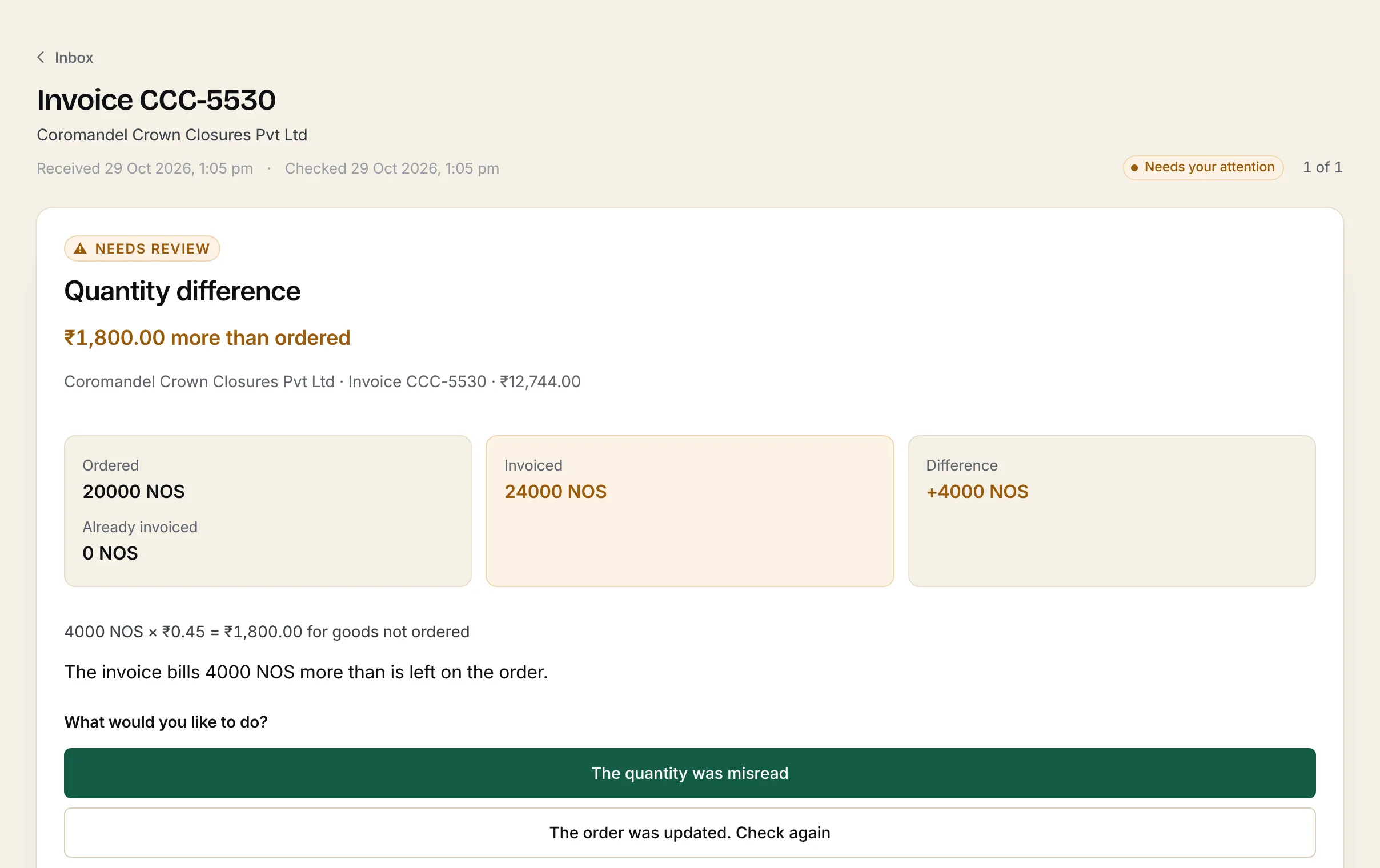
Supplier invoices, delivery notes and other documents are captured, checked against business records and only sent to a person when something needs a decision.

Operational issue management

Issues are logged once, assigned an owner and a response target, escalated when overdue and recorded for later review.

Reporting and notifications

Routine reports are compiled automatically and the right people are alerted when a figure or status needs attention.

Automate the process you want, not the one you have

Automating a confused process produces confused results faster. Before anything is automated, I look at why each step exists, which steps can be removed, and which decisions genuinely need a person. The automation then follows a simpler process with fewer hand-offs.

What good automation looks like

It is predictable, explainable and observable. Your team should be able to see what the automation did, why it did it, and what is waiting for them. If an automated step cannot be explained to the person responsible for the outcome, it is not finished.

How it works

How an automation engagement works

  1. Observe the workWalk through the process with the people who do it, including the exceptions they handle every week.
  2. Measure where time goesIdentify the steps that are frequent, repetitive and error-prone, using your own estimates and records rather than assumed figures.
  3. SimplifyRemove steps that add no value, agree standard rules and define who decides what.
  4. Automate in incrementsStart with the step that gives the clearest benefit at the lowest risk, prove it, then extend.
  5. Keep a person in controlEvery automated workflow has a clear exception path, an audit trail of what happened and why, and a way to stop or correct it.
Proof of work

Related projects

My own productIn active development

Veyrafy

My own product for verifying supplier invoices. It reads invoices, checks them against purchase orders, goods receipts and supplier records, and asks a person when something does not match.

Read the case study →

Client project for iDine

OpsFirst

A provider-side platform built for iDine to deliver and manage services for iDine's clients, covering customer accounts, departments, teams, categories and issue routing.

Read the case study →

My own product

OpsDone

My own operations management SaaS product. It helps businesses log operational issues, give each one an owner and a response target, escalate what is overdue and keep a record of the work.

Read the case study →
FAQ

Common questions

Which processes should we automate first?

Usually the ones that are frequent, rule-based and currently cause delays or errors. A short discovery exercise ranks candidates by effort, risk and the time they actually consume, rather than by how interesting they are to automate.

Do we need AI to automate our processes?

Often not. Many processes are best automated with ordinary software rules, integrations and workflow tools. AI is useful where the input is unstructured, such as documents or free text, and even then it should be checked by clear rules.

Will automation remove people from the process?

Good automation removes repetitive steps, not judgement. Decisions that need a person stay with a person, and the system makes those decisions easier by presenting the right information.

Can you automate a process that is not documented?

Yes. Documenting how the process really works, including its exceptions, is the first step. It is often where the biggest improvements are found.

Insights

Further reading

Have an operational problem worth solving?

Tell me what is slowing your team down and which systems you use today. You do not need a technical specification: describing the problem is enough to start.

Talk about a process you want to automate