Service

Custom software development

Build business applications, internal tools and web platforms when off-the-shelf software cannot support the way your business works.

Sound familiar?

The problems this solves

  • Off-the-shelf software forces your team into workarounds that cost time every day.
  • A critical process runs on a spreadsheet or an ageing tool that no longer scales.
  • You have a product or service idea that needs a dependable digital platform.
  • Previous development work stalled because requirements were unclear or nobody owned the outcome.
What I deliver

Typical projects

Examples of the work this service covers. Most projects combine several.

Internal operations tools

Applications that manage a specific operational process, such as issue management, scheduling, approvals or field work, with roles and an audit trail.

Customer and partner portals

Secure web applications where customers, suppliers or partners submit, track and manage their own information.

SaaS and digital products

Multi-user products built for a market, designed with security, configuration and growth in mind from the start.

Extending existing systems

Applications that add the missing capability around an ERP or other core system, connected to it rather than duplicating it.

Build only what earns its place

Custom software is a long-term asset and a long-term responsibility. Before recommending it, I check whether existing products, configuration or integration would solve the problem at lower cost. When building is the right decision, the first release is kept deliberately focused so it is useful early and can grow on evidence.

How the work is delivered

I take responsibility for understanding the problem, designing the solution and getting it delivered. The engineering is carried out using AI-assisted development and, where the project needs them, developers and specialists I coordinate. You deal with one person who understands both the business requirement and the technical work.

How it works

How a custom software project runs

  1. DiscoveryThe process, users, rules, data and integrations, written down and agreed.
  2. Architecture and planTechnology choices, hosting, security, integrations and a delivery plan in stages.
  3. Iterative deliveryWorking software shown regularly, so feedback shapes the product while changes are still cheap.
  4. TestingAutomated tests for business rules, plus testing with realistic data and real users before go-live.
  5. Launch and supportDeployment, documentation, monitoring and a plan for improvements.
Proof of work

Related projects

All 4 projects →

My own productIn active development

Veyrafy

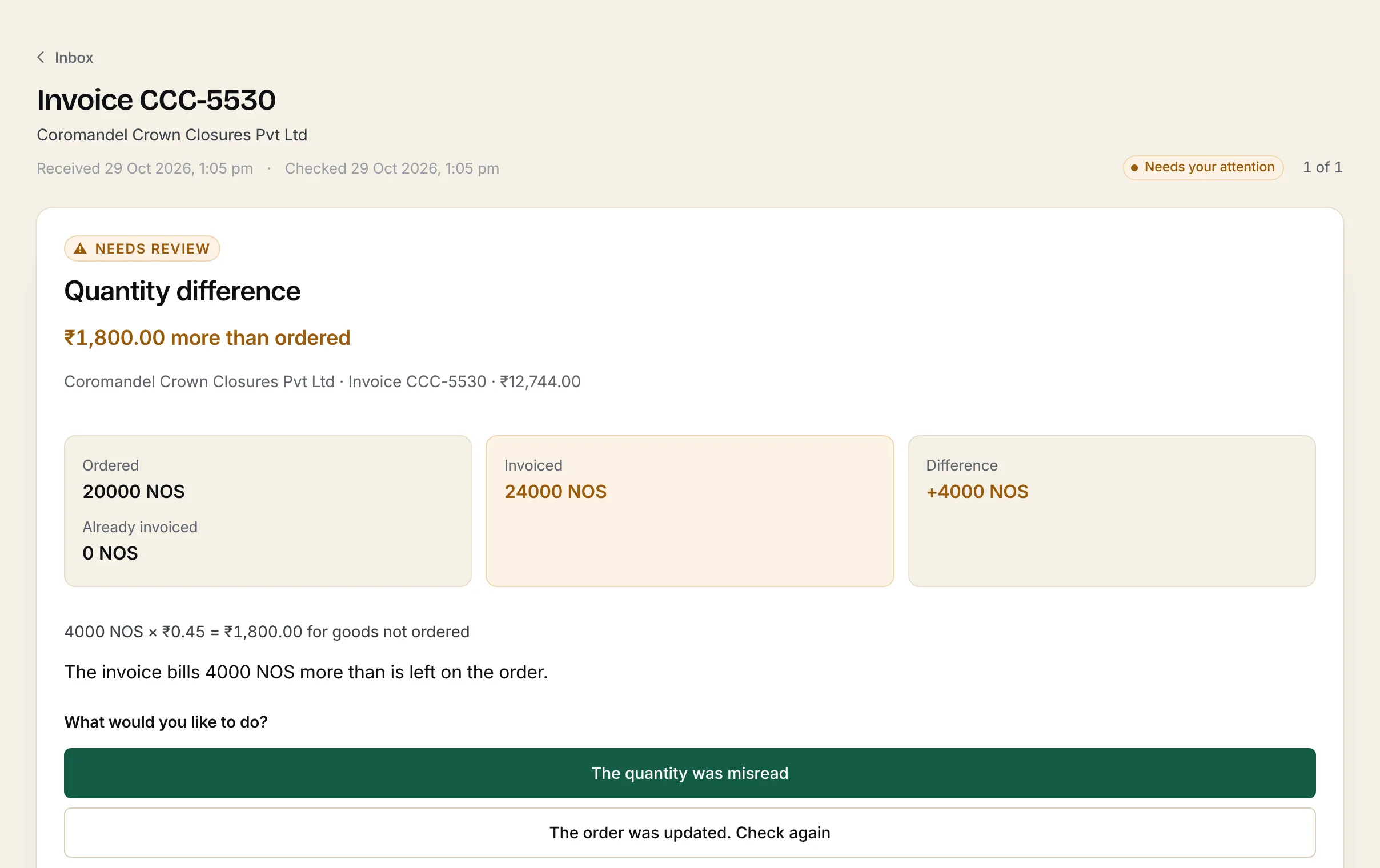
My own product for verifying supplier invoices. It reads invoices, checks them against purchase orders, goods receipts and supplier records, and asks a person when something does not match.

Read the case study →

Client project for iDine

OpsFirst

A provider-side platform built for iDine to deliver and manage services for iDine's clients, covering customer accounts, departments, teams, categories and issue routing.

Read the case study →

My own product

OpsDone

My own operations management SaaS product. It helps businesses log operational issues, give each one an owner and a response target, escalate what is overdue and keep a record of the work.

Read the case study →
FAQ

Common questions

Should we build custom software or buy an existing product?

Buy when a product fits your process well enough and the remaining gaps can be filled by configuration or integration. Build when the process is a genuine differentiator, when products would force costly workarounds, or when integration would be more complex than a focused application. I will give you an honest recommendation either way.

Who writes the code?

I lead the requirements, architecture, delivery and testing, and use AI-assisted development tools together with developers and specialists where the work requires them. You have one accountable point of contact throughout.

Who owns the software we commission?

Ownership of commissioned work, its source code and its hosting accounts is agreed in writing before the project starts.

Can you take over or improve an existing application?

Yes, after reviewing its code, hosting and documentation to understand its condition. The review tells us whether to improve, stabilise or replace it.

Insights

Further reading

Have an operational problem worth solving?

Tell me what is slowing your team down and which systems you use today. You do not need a technical specification: describing the problem is enough to start.

Discuss a software project